How Extra Loan Payments Can Save You Money and Pay Off Debt Faster
Paying off a loan can take several years, especially when you follow the same monthly payment schedule. But what if you could finish paying your loan sooner and reduce the amount of interest you owe?
Extra loan payments can help make this possible. Even a small additional amount each month may reduce your outstanding loan balance and help you become debt-free sooner.
At GetCalculatorHub, we make everyday calculations easier with simple online tools. In this guide, you will learn how extra payments work, how they affect loan interest and how to use them wisely.
What Are Extra Loan Payments?
Extra loan payments are additional amounts you pay beyond your required monthly loan payment.
For example, if your regular monthly payment is $400 and you pay $450, the additional $50 is an extra payment.
When your lender applies this additional amount directly to your loan principal, it reduces the original amount you still owe.
A loan payment generally includes two main parts:
- Principal: The original amount you borrowed.
- Interest: The cost charged by the lender for borrowing money.
Reducing your principal balance can lower the interest charged over the remaining loan period, depending on your loan agreement and interest calculation method.
How Do Extra Loan Payments Reduce Interest?
Many fixed-rate installment loans use an amortization schedule. This means each regular payment covers interest and principal, while the remaining balance gradually decreases.
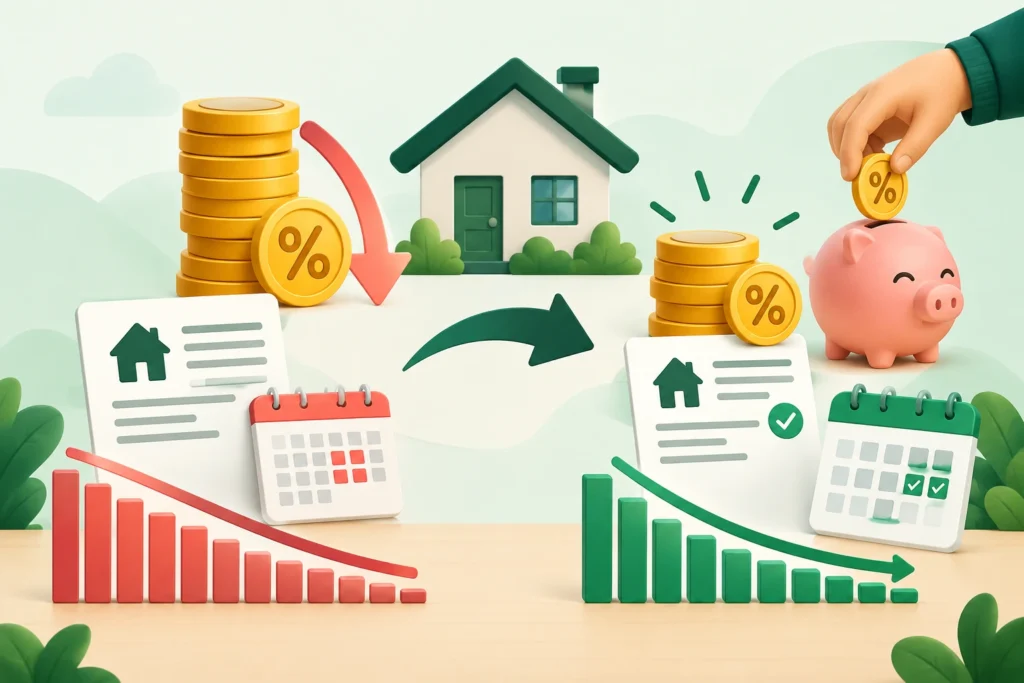
When you make an additional principal payment, your outstanding balance becomes smaller.
As a result, future interest charges may also decrease because interest is calculated on a lower balance.
For example, imagine you have a $20,000 loan with a 10% annual interest rate and a five-year repayment term.
Your estimated regular monthly payment would be approximately $424.94.
If you pay an additional $100 every month, your total monthly payment becomes approximately $524.94.
This could help you:
- Pay off your loan in approximately 47 months instead of 60 months.
- Save approximately $1,333.80 in interest.
- Finish your repayment around 13 months earlier.
These are illustrative estimates based on a fixed monthly interest calculation, with additional payments applied directly to the principal and no extra fees or prepayment penalties.
Monthly Extra Payments vs. One-Time Payments
There are different ways to make additional loan payments. The best option depends on your income, savings and repayment goals.
1. Monthly Extra Payments
You can add a fixed amount to your regular monthly payment.
For example, if your monthly installment is $300, you could pay $350 instead.
This approach can help you build a consistent repayment habit.
2. One-Time Extra Payments
You can also make a larger additional payment whenever you have extra money.
This could come from a work bonus, savings or another source of income.
A one-time payment can reduce your outstanding principal earlier, potentially lowering future interest charges.
3. Biweekly Payments
Some borrowers choose to make payments every two weeks instead of once a month.
Depending on the lender’s payment schedule, this may result in the equivalent of one additional monthly payment each year.
However, check how your lender processes biweekly payments before choosing this method.
What Should You Check Before Making Extra Payments?
Before paying more than your required installment, review your loan agreement and understand the lender’s rules.
Check for Prepayment Penalties
Some lenders charge fees when borrowers repay loans earlier than scheduled. Check whether your loan has an early repayment penalty.
Confirm Principal Payment Rules
Ask your lender whether additional payments will reduce the principal balance or simply count toward your next scheduled payment.
Keep Emergency Savings
Avoid using all your available savings to pay off debt. Unexpected expenses can happen, so keeping an emergency fund is important.
Compare Other Debts
If you have multiple loans or credit card balances, compare their interest rates. Paying down higher-interest debt first may save you more money.
How to Calculate Your Loan Savings
Understanding your loan payments can help you make better repayment decisions.
You need a few basic details:
- Original loan amount
- Annual interest rate
- Loan repayment period
- Regular monthly payment
- Additional payment amount
You can use our Loan Calculator to estimate your monthly installments, total interest and overall borrowing costs.
Compare your regular repayment plan with a plan that includes additional principal payments. This can help you understand how extra payments may affect your repayment timeline.
Frequently Asked Questions
Common questions about extra loan payments, interest savings and early repayment.